

To avoid the busiest safari periods, consider travelling outside the Masai Mara’s high season, roughly June to October. A Masai Mara safari package can also be shaped around where you stay and how you travel, so your days are not defined solely by the busiest wildlife-viewing areas.
Peak season has clear appeal: wildlife is abundant, and the Great Migration draws many visitors to the reserve. But a memorable safari does not depend on one season or a single sighting. Your choice involves balancing migration timing, quieter time in the landscape, comfort and the pace of your Kenya itinerary.
This guide explains how timing and location affect the feel of game drives, what to compare when choosing accommodation and travel styles, and how to fit the Mara into a wider journey through Kenya. You will have a clearer way to weigh the trade-offs and choose a safari that suits the experience you want.
Key Takeaways
- For a quieter safari, weigh season and camp location together rather than relying on timing alone.
- Choose travel dates around the wildlife experience you value, while allowing room for the Mara’s changing conditions.
- Compare accommodation by comfort, setting and how its location shapes your time on game drives.
- Decide whether shared or private travel best suits your preferred pace, flexibility and company.
- Shape the wider Kenya itinerary around travel time and the destinations you want to experience beyond the reserve.
How can I avoid the crowds on a Masai Mara safari?
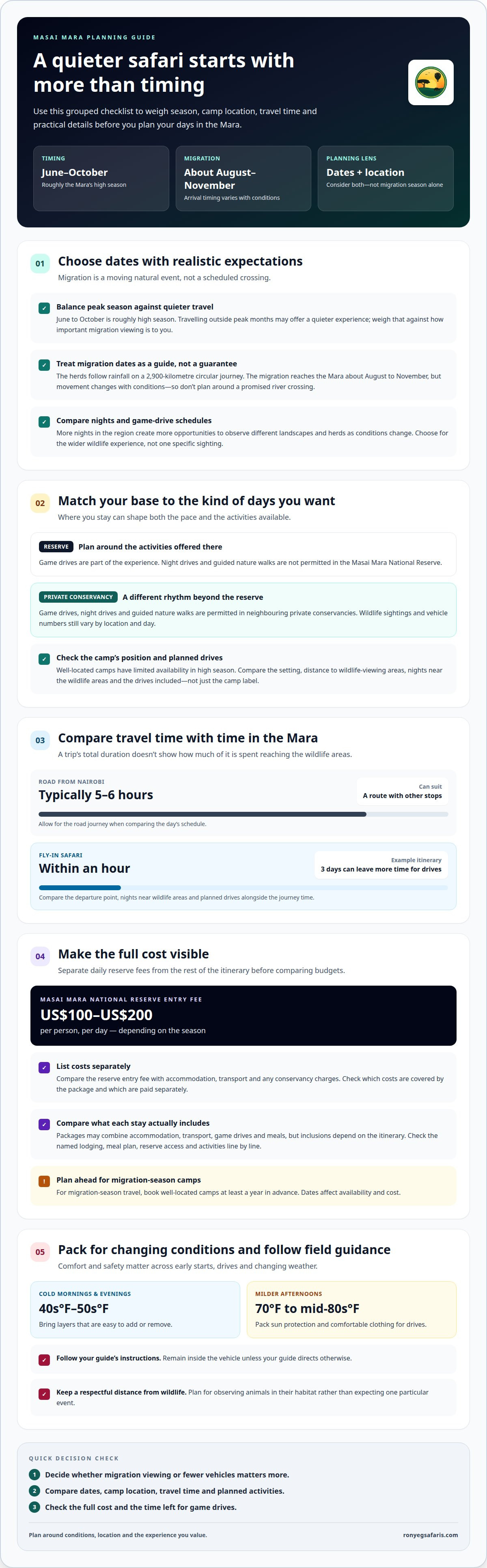
Plan around timing and location, not migration season alone. The Masai Mara’s high season is roughly June to October, when well-located camps have limited availability. A stay in a neighbouring private conservancy offers a different rhythm: game drives, night drives and guided nature walks are permitted there, but not in the Masai Mara National Reserve. These activities can help shape a quieter adventure, although wildlife sightings and vehicle numbers vary by location and day.
Travel style also affects how much of each day you spend in the Mara. From Nairobi, the road journey typically takes 5 to 6 hours; fly-in safaris reach the area within an hour. A 3-day fly-in itinerary can leave more time for game drives, while a road route may suit travellers combining the reserve with other stops. Compare the departure point, time in the vehicle, nights near the wildlife areas and planned drives, not just the trip’s total duration.
Build a budget around the full itinerary. The Masai Mara National Reserve entry fee is US$100 to US$200 per person per day, depending on the season. Separate that daily fee from accommodation, transport and any conservancy charges when comparing safari tour budgets. Package prices depend on travel dates, route, accommodation and travel style; the price is given after a quote request. A clear comparison shows which costs are covered and which are paid separately.
For migration-season travel, book well-located camps at least a year in advance. June to October is high season, so popular locations can fill early. Dates affect availability and cost, while travelling outside peak months may offer a quieter experience. First decide whether migration viewing or fewer vehicles matters more, then compare dates and itineraries against that priority.
For safety, follow your guides’ instructions, remain inside the vehicle unless your guide directs otherwise, and keep a respectful distance from wildlife. For packing, prepare for cold mornings and evenings in the 40sF-50sF, then milder afternoons from 70F to the mid-80sF. Bring layers that are easy to add or remove, along with sun protection and comfortable clothing for drives. A Maasai village visit can add cultural context to the wildlife highlight, while a well-planned route helps balance time in the reserve with travel across Kenya or Tanzania.
Wildlife viewing and the wildebeest migration
The Great Migration is a seasonal movement, not a scheduled crossing. Safari itineraries can include migration-focused game drives or a hot-air-balloon ride, so compare the stated activities before choosing.
Migration Timing and Season
The herds follow rainfall across a 2,900-kilometre circular journey through the ecosystem. The migration reaches the Masai Mara about August to November annually, while the broader movement includes almost two million wildebeest, zebra and gazelle. Because the herds move with changing conditions, choose dates for the wider wildlife experience, not a promised river crossing.
Migration timing is only one part of the decision. July to September is also commonly associated with the Mara, but the animals’ movement does not follow fixed calendar dates. Compare your travel dates, the number of nights in the region and the game-drive schedule. A longer stay creates more opportunities to observe different landscapes and herds as conditions change.
Wildlife Viewing
Migration viewing can mean more than watching wildebeest cross a river. The herds travel with zebra and gazelle, while predators and other wildlife shape the wider scene. The Masai Mara also has over 500 bird species, giving travellers a reason to look beyond large mammals. Ask how much time the itinerary allows for unhurried drives and varied sightings.
A river crossing is dramatic, but it is just one possible moment in a much longer journey. Herds may gather, move along the banks or travel across open grassland. Guides interpret changing signs and help travellers notice animal behaviour, tracks and smaller details. Set expectations around observing wildlife in its habitat, rather than witnessing one particular event.
Compare the game-drive plan with the experience you want. A migration-focused itinerary prioritizes time in areas used by the herds, while a broader wildlife itinerary can include varied habitats and other sightings. Sunrise balloon safaris offer a different perspective from a vehicle; drives keep you close to the ground and the movement of animals. Check which activities the package includes.
For a more complete journey, consider how the Mara fits beside other Kenyan destinations, rather than treating migration as the only highlight. A well-paced itinerary leaves room for wildlife viewing without making every day depend on herd movement. If you want the dates, destinations and activities shaped around your priorities, explore tailor-made Kenya safaris.
Budget, mid-range and luxury accommodation
Safari packages can combine accommodation, transport, game drives and meals, but inclusions depend on the itinerary. Compare the named lodging, meal plan, reserve access and activities line by line before choosing.
Accommodation Price Tiers
Budget, mid-range and luxury describe different levels of comfort, setting and service, not fixed standards across all camps. Budget camping can suit travellers who value time outdoors over private lodge facilities. Mid-range stays balance comfort with practical access to game drives. Luxury lodges put greater emphasis on refined facilities and attentive service. Compare what each property provides, rather than relying on its tier label.
Location matters as much as room style. A camp near the plains may reduce the distance to some wildlife-viewing areas, while another setting may offer a quieter base. The Masai Mara National Reserve covers 1,510 km², so a lodge’s position shapes the daily route. Check how the accommodation location relates to the itinerary’s planned drives and time in the reserve.
Safari Lodges and Meals
Safari lodges and tented camps offer different ways to experience the landscape. A lodge may suit guests who prefer a more permanent structure; a tented camp keeps the surrounding plains close. Consider room arrangements, shared spaces and the property’s setting. For example, a family may value room to rest between drives, while wildlife-focused travellers may prioritize location.
Meal plans deserve the same attention as the room description. One Kenya wildlife safari package includes 10 nights in handpicked hotels and safari lodges, with 10 breakfasts, 9 lunches and 9 dinners. That example shows why travellers should compare meal counts against nights and planned travel days. A breakfast included at a lodge may not answer whether lunch is arranged during a full day out.
Before booking, make a simple comparison of the written inclusions:
- Accommodation: note the property type, location and number of nights.
- Meals: compare breakfast, lunch and dinner counts with the itinerary.
- Activities: identify which game drives and other experiences are included.
- Access and transport: see how reserve entry and travel between places are handled.
These details help distinguish a lower-cost camping plan from a lodge-based stay without relying on labels. They also clarify what is outside the package. If your itinerary includes time to watch elephants on the plains, check how the accommodation location and daily schedule support that experience.
Group, small-group, and private travel
The travel format shapes each game drive, from shared conversation to a pace set around your own party. Compare vehicle occupancy, the daily schedule and time at wildlife sightings before choosing. “Small group” can mean different arrangements, so look for the actual group and vehicle limits rather than relying on the label.
Shared safaris bring travellers together in one vehicle and follow a common route. Listed Masai Mara tours set different maximums, including seven or eight people per vehicle. Those limits affect space, sightlines and how easily everyone can follow a leopard through the grass. A separate Kenya wildlife tour is designed for groups of 6-22 travelers, illustrating why total tour size and vehicle capacity aren’t interchangeable.
Private travel suits people who want greater control over the day’s rhythm. A couple may prefer to linger at a sighting; a family may need a more flexible pace between drives. Compare pickup arrangements, departure times and game-drive duration with your priorities. A private safari still follows wildlife conditions, so flexibility means adjusting the day, not dictating animal movement.
The Masai Mara National Reserve and neighbouring private conservancies offer different activities. Game drives, night drives and guided nature walks are permitted in the conservancies, but not in the reserve. This distinction matters if a night drive or walk is central to your plans. Identify where each activity takes place and whether the itinerary divides time between the reserve and conservancy land.
Conservancies also connect wildlife protection with local livelihoods. They help protect wildlife while providing income and education to nearby communities. Safari operators in private conservancies contract with landowners and provide monetary compensation and other assistance. When comparing itineraries, consider whether your stay includes conservancy time and how that affects activities and the setting of your drives.
Use these points to compare shared and private options:
- Vehicle capacity: distinguish the number of travellers on the tour from the maximum in each vehicle.
- Daily rhythm: compare shared departure plans with the flexibility you want from private travel.
- Activity location: separate reserve drives from conservancy night drives and guided walks.
- Vehicle type: a four-wheel-drive vehicle is recommended for driving in the Masai Mara.
For a journey from Nairobi, weigh the road transfer against the time available for game drives. A shared schedule can suit travellers who value a structured adventure, while private travel may better fit a group with particular interests. Match the format to your preferred pace, valued activities and the places you want to explore.
Kenya safari itinerary and destinations
A Kenya itinerary can centre on the Masai Mara National Reserve or connect it with other wildlife destinations. Compare the time spent in each place, travel between stops and the kind of experience you want.
Safari Package Choices
Choose between a Mara-focused stay and a route that includes destinations such as Lake Nakuru, Lake Naivasha or Amboseli. A four-day Maasai Mara and Lake Nakuru itinerary combines two wildlife areas, while a five-day route can add Lake Naivasha. Consider the sequence of stops, not just the destination list, because each transfer takes time out of the day.
Accommodation style also shapes the route. A tented camp or luxury lodge can serve as a base for game drives, while a multi-stop itinerary changes where you sleep along the way. Compare the number of nights in the Mara with nights elsewhere. If seeing wildlife in the reserve is your main aim, protect enough time there rather than adding destinations simply to lengthen the list.
Tour Lengths and Itineraries
Short fly-in trips can focus on the Mara, while road itineraries can connect it with other Kenyan destinations. A three-day fly-in safari is one listed option; four-day plans can pair the Mara with Lake Nakuru. On a longer route, consider how each extra stop affects transfer time, wildlife viewing and the pace of your journey.
Fly-in safari packages from Nairobi use flights from Wilson Airport to a Mara airstrip. These flights depart twice daily and reach the Mara within an hour. This is the clearest option for travellers prioritizing time in the reserve over the road journey. Match the flight schedule to the itinerary’s arrival and departure days.
Before choosing, map the route in order. Note which days involve transfers, which include game drives, and where each overnight stay falls. A Kenya wildlife safari itinerary can span 13 days, while another includes a Tanzania extension and lasts 18 days. These examples show how a longer trip can widen the journey beyond the Masai Mara National Reserve, but also requires more time away.
- Mara focus: prioritize nights and drives near the reserve.
- Multi-destination route: compare transfer days with time at Lake Nakuru or Amboseli.
- Fly-in plan: align Wilson Airport flights with the itinerary’s first and final days.
Choose the route by ranking wildlife priorities, preferred pace and time available, then remove stops that compete with those priorities. For a Kenya journey shaped around your chosen destinations and travel style, plan a tailor-made Kenya safari.
Ronyeg Kenia Tours and Travels: Tailor-made Kenya safaris
Ronyeg Kenia Tours and Travels designs tailor-made Kenya safaris for travellers balancing wildlife viewing, accommodation and time across the country. Choose a customized route when you want the itinerary shaped around your priorities, whether the Masai Mara is your main destination or part of a wider Kenya journey.
Its safari packages include festive 2026/27 safaris, giving travellers another way to plan around holiday dates. Travel-trade ground partner services are also available for industry partners arranging Kenya journeys. The aim is a clear itinerary that brings destinations, travel style and planned experiences together without losing sight of what matters most to you.
To discuss a Kenya safari shaped around your travel plans, contact Ronyeg Kenia Tours and Travels or visit ronyegsafaris.com.
Choose the journey that feels right for you
Your next step is to decide what you want your days in Kenya to feel like. A Masai Mara safari package can be planned around a particular wildlife interest, a preferred pace or a balance between the Mara and other destinations. Choose the priority that matters most, then use it to guide the route, travel style and time spent in each place.
That clarity makes planning more purposeful. Instead of trying to fit every possible stop into one journey, start with the experience you most want to remember. Ronyeg Kenia Tours and Travels can shape a Kenya safari around your preferences, including festive-season travel or arrangements for travel-trade partners.
When you’re ready to turn your priorities into a considered itinerary, contact Ronyeg Kenia Tours and Travels. The open plains are waiting, and a thoughtful plan is a good place to begin.
Frequently Asked Questions
When is the best time to see the great migration?
The migration reaches the Masai Mara roughly from August to November each year, but the herds move with rainfall rather than on a fixed schedule. If witnessing the migration is your priority, plan dates within that seasonal window and allow time for several game drives. Herd presence and the chance of a river crossing can change, so focus on observing the migration’s wider movement, not one specific moment.
How long is the drive to the park?
The road journey from Nairobi to the Masai Mara typically takes 5 to 6 hours. Account for that transfer when deciding how many nights to spend near the reserve, especially if your arrival day also includes a game drive. A fly-in option from Wilson Airport takes under an hour, making it useful when you have limited time or want to prioritize time in the Mara.
What animals can you see in the Masai Mara National Reserve?
Wildlife sightings can include lions, elephants, leopards, buffalo, rhinos, giraffes, zebras and wildebeest. The reserve also offers birdwatching, with over 500 bird species recorded. Which animals you encounter depends on where your game drive travels and what wildlife is moving through that area. Bring binoculars if you have them, and give your guide time to pause for smaller sightings as well as large herds.
What lodges or camps would you recommend?
The right camp depends on your preferred setting, comfort level and route. A traveller focused on wildlife drives, for example, may value a location suited to the planned game-drive areas, while someone seeking more time at camp may prioritize its facilities and atmosphere. Compare the actual property, room arrangement, meal plan and location in your itinerary. A camp’s name alone does not show how well it fits your trip.
What opportunities are there to meet local Maasai people?
A Maasai village visit can offer an opportunity to learn about local culture, daily life and traditions. Treat it as a hosted cultural encounter, not a performance or a substitute for broader understanding. Before including a visit in your itinerary, consider how it fits the day’s route and what you hope to learn. A thoughtful visit leaves room for listening and respectful exchange.
How much does a Masai Mara safari package cost?
Cost depends on travel dates, accommodation, transport, length of stay and included activities. Reserve entry fees and conservancy arrangements also affect the overall budget, so compare the full itinerary rather than accommodation alone. For a tailored trip, the price depends on the details and is provided after a quote request. A clear itinerary helps you understand how each choice affects the total.
What are the best Masai Mara safari packages for different budgets?
The best fit depends on which parts of the experience matter most to you. A budget-conscious traveller might prioritize essential game drives and practical accommodation, while someone seeking more comfort may prefer a lodge-based stay. For greater flexibility, consider a private itinerary. Compare what each plan includes, especially accommodation, meals, transport and activities, then decide where comfort or time in the reserve deserves priority.
How many days should a Masai Mara safari package last?
Choose the length according to how much time you want in the Mara and whether you plan to visit other destinations. A three-day itinerary is a listed short-stay option; a four-day route can combine the Mara with Lake Nakuru. If wildlife viewing is your main focus, avoid filling the schedule with transfers. For a wider Kenya journey, allow time for both travel between places and experiences at each stop.


