

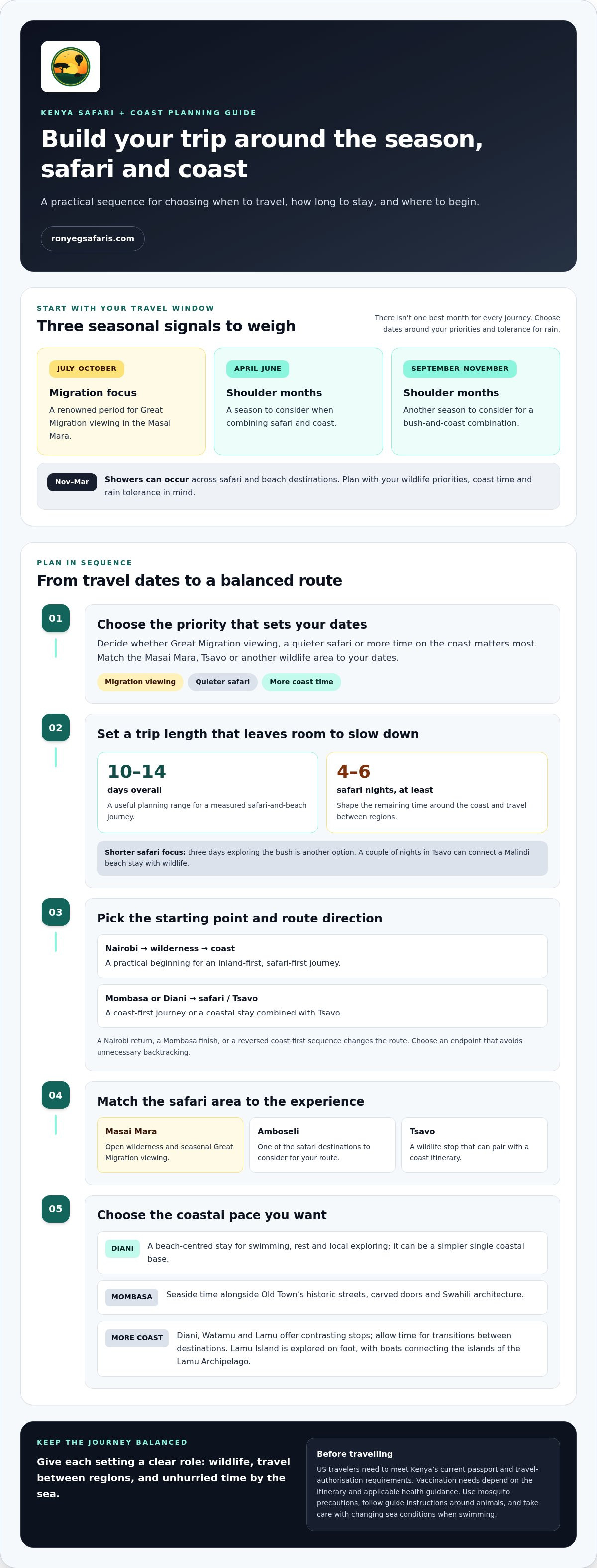
The best time for a Kenya safari and beach holiday depends on what you want to see, not on one perfect month. July to October is a renowned period for Great Migration viewing in the Masai Mara, while April to June and September to November are shoulder months for combining the bush with the coast. Showers can occur across safari and beach destinations from November to March, so plan around your priorities and preferred pace.
It’s natural to want both open savannah and warm Indian Ocean shores in one journey. A 10- to 14-day itinerary gives you room to explore: allow at least 4 to 6 nights on safari, then settle into the coast without rushing between landscapes. This guide explains when to travel, how Nairobi, Mombasa and Diani can shape your starting point, which destinations to consider, and how to balance safari days with time by the sea.
Key Takeaways
- Choose travel dates around your priorities: the Great Migration is renowned in the Masai Mara from July to October, while shoulder months offer another season to consider.
- Use Nairobi, Mombasa or Diani as your starting point to shape the route between safari country and the coast.
- Allow 10 to 14 days for a more measured journey, including at least 4 to 6 nights on safari.
- Match your safari destinations to the experience you want, from the Mara’s open plains to Amboseli and the wide landscapes of Tsavo.
- Balance game drives with unhurried coastal time, and choose a route that fits your travel season and preferred pace.
What is the best time of year for a beach and safari holiday in Kenya?
There isn’t one best month for every journey. July to October is renowned for Great Migration viewing in the Masai Mara, while April to June and September to November are shoulder months for combining safari and coast. Showers can occur in Kenya’s safari and beach destinations from November to March, so choose dates around wildlife priorities, time on the coast and your tolerance for rain.
For a balanced Kenya safari and beach holiday, allow 10 to 14 days overall and at least 4 to 6 nights on safari. The remaining time can be shaped around the coast and the route between regions. Three days exploring the bush offers a shorter safari focus; adding a couple of nights in Tsavo can connect a Malindi beach stay with wildlife.
Think of the journey as a combination of distinct landscapes, not simply two stops. The Masai Mara brings open wilderness and seasonal migration viewing; Mombasa adds a historic coastal city, and Diani offers time beside the Indian Ocean. A route can also include Tsavo National Park, about a hundred or so kilometres inland from the Malindi region.
Mombasa’s past is visible in Old Town’s narrow streets, carved doors and Swahili architecture. Swahili culture reflects centuries of exchange along the East African coast, shaped by African, Arab and Indian Ocean connections. Set aside time to explore Mombasa’s historic quarter alongside the beach. The coast has its own stories, not just a quieter ending after safari.
Getting from the Masai Mara to the coast depends on the route and transport plan. Mombasa’s airport makes it possible to combine a morning Maasai Mara game drive with an evening by the coast. This option can reduce time in transit, while a road itinerary lets the landscape change gradually from savannah to coastal lowlands.
A city, wilderness and coast itinerary gives each setting a clear role. The Kenya Kaleidoscope: City, Wilderness & Coast tour includes Diani Beach, Lewa Wildlife Conservancy and Naboisho Conservancy. Use this kind of varied route as a planning example: decide whether city time, wildlife areas or the Indian Ocean deserves the greatest share of your days.
US travelers need to meet Kenya’s current passport and travel-authorisation requirements; vaccination needs depend on the itinerary and applicable health guidance. Malaria prevention, wildlife awareness and ocean safety also matter: use mosquito precautions, follow guide instructions around animals, and take care with changing sea conditions when swimming.
To tailor the season and route, first choose your priority: migration viewing, a quieter safari, or more time on the coast. Then match the Masai Mara, Tsavo or another wildlife area to your dates, and allocate enough nights to enjoy each stop without turning the journey into a series of transfers.
Nairobi, Mombasa, and Diani Beach starting points
Your starting point shapes the order of safari and coast, as well as the time spent travelling between them. Nairobi works well for an inland-first route; Mombasa or Diani can anchor a coast-first journey or a Tsavo combination.
Beach Stops in Diani and Mombasa
Diani Beach suits travellers who want a proper coastal stay, with time to swim, rest and explore locally. Mombasa offers a different rhythm, combining seaside time with the city’s historic streets and portside character. Choose Diani for a quieter, beach-centred finish, or Mombasa when you want urban history alongside the shore. Both can serve as the coastal end of a safari route.
Coastal and Safari Itinerary Combinations
Diani pairs naturally with Tsavo East for a compact bush-and-beach route: one Kenya Beach & Ngutuni Overnight Safari includes a two-day safari experience in Tsavo East. For more coastline, Diani, Watamu and Lamu offer contrasting stops rather than one continuous beach stay. Lamu Island is explored on foot, while boats connect the islands of the Lamu Archipelago.
Nairobi is a practical beginning for travellers who want to reach the wilderness before the coast. A 10-day Kenya Safari & Beach Holiday starts and ends in Nairobi, keeping the route within Kenya. Another 11-day itinerary departs Nairobi and ends in Mombasa, linking the capital and the coast without returning to the starting city. These examples show how the endpoint changes the route’s shape.
For safari-first travel, Nairobi lets you begin with game drives before settling into Diani Beach. If migration viewing is central to your plans, place the Masai Mara in the inland portion, then continue to the coast. You can also reverse the sequence: start beside the Indian Ocean, then travel inland. A luxury itinerary may use flights to connect distant regions, while a road route puts more emphasis on the changing landscape.
Diani Beach itineraries can be short coastal endings or longer stays within a multi-stop journey. Decide whether you want a single beach base or several coastal settings before choosing the route. Adding Watamu or Lamu means allowing time for the transition between destinations; choosing Diani alone keeps the coast portion simpler. Zanzibar is in Tanzania, not Kenya, so it belongs in a cross-border itinerary rather than a Kenya-only coastal route.
To choose a starting point, list your priorities in order: safari first or beach first, one coastal base or several, and a Nairobi return or Mombasa finish. Then match those choices to the itinerary length and transfer pattern. A clear endpoint helps prevent unnecessary backtracking and leaves more of the trip for game drives, beach time and the places between them.
Recommended safari and beach holiday duration
A useful planning range is 10 to 14 days, with at least 4 to 6 nights on safari. That leaves room for wildlife viewing, travel between regions, and time to slow down at the coast. A shorter adventure can work, but each additional destination takes time from game drives or beach days.
Tour lengths show how differently the same combination can be arranged. A 7-day Mara and Amboseli itinerary adds two nights at Diani Beach, while a 9-day Mara and Diani route gives the journey more breathing room. For a broader circuit, a 13-day itinerary can include Nairobi, Ol Pejeta, the Masai Mara and Diani.
Eight days can suit travellers who want a focused bush-and-beach break. A Kenya family itinerary of that length keeps the plan compact; a 10-day route can provide more time for safari and coast. At the longer end, a 14-day classic package includes four days at Diani Beach Resort. Match the duration to how many regions you want to experience, not simply the number of stops.
Safari lodges and beach resorts differ in setting and daily rhythm. A lodge places you close to wildlife areas, with game drives shaping the day; a coastal resort centres the stay on the shore and leisure time. Styles range from practical and activity-focused to more luxurious, while comfort level, location, season and transport shape the overall budget.
Prices depend on accommodation standard, travel season, route, transport and itinerary length, and are provided after a quote request. Shared-vehicle and private arrangements can also differ in how the journey is organised, so compare what each plan includes before choosing.
Pack for both open-country game drives and warm coastal days. Bring neutral, comfortable clothing, a light layer for cooler mornings, sun protection, swimwear and shoes suited to walking. Keep travel documents, personal medication and essentials accessible during transfers between safari areas and the coast.
Build the itinerary in sequence: choose the safari region, decide how many nights it deserves, then allocate coastal days and transfer time. For example, a 10-day plan could focus on the Masai Mara and Diani, while a 14-day itinerary can include more stops without compressing every stay. Leave the final plan filled with enough unstructured time for rest.
A beach-and-safari itinerary can extend beyond Kenya, but an island such as Zanzibar is in Tanzania and makes the route a cross-border trip. For a Kenya-only journey, Diani, Mombasa or Watamu can provide the coastal finish. Choose a single beach base when a slower ending matters most.
Masai Mara, Amboseli, Tsavo, and other safari destinations
Kenya’s safari destinations offer different landscapes and route possibilities. The Masai Mara suits travellers drawn to broad plains and wildlife viewing, while Amboseli and Tsavo can shape a southern circuit. Samburu adds a northern option. Choose destinations by the experience you want, then consider how each fits with your coastal endpoint.
In the Masai Mara, choose an itinerary that gives you time to explore the reserve rather than treating it only as a transfer stop. One example, the Porini Cottages Mara Safari & Beach holiday, includes four nights at Porini Ol Kinyei Safari Cottages in the Masai Mara. This illustrates how a lodge in a specific area can anchor the wildlife portion of a longer journey.
Amboseli, Tsavo East and Tsavo West can suit travellers planning a southern Kenya route. They can be visited separately or combined, depending on the journey’s length and coastal destination. A route including Tsavo may connect naturally with the coast, while a Masai Mara itinerary may need a different transfer plan. Compare the full route, not just the place names on a map.
Your beach choice also affects which safari destinations make practical sense. Kenya’s coast has four broad areas: the southern coast, Mombasa, Malindi and the far northern Lamu Archipelago. Diani is on the southern coast; Watamu and Malindi offer a different northern-coast setting, while Lamu brings an island destination into the plan. Choose a beach area that complements your inland route.
For a shorter itinerary, fewer destinations mean less time changing lodges and travelling between regions. A Masai Mara and Diani pairing keeps the focus on one major wildlife area and one coastal base. Adding Amboseli or Tsavo creates more variety but requires careful pacing. A national park is not simply a stop on the route; it needs enough time for drives and unhurried wildlife viewing.
- Masai Mara: choose it when reserve-based wildlife viewing is the central safari priority.
- Amboseli: consider it as part of a southern route that may continue toward the coast.
- Tsavo East or Tsavo West: weigh either park when planning a safari linked with coastal destinations.
Before choosing lodges, mark the safari areas and beach destination on one itinerary. Then review the sequence, transfers and length of each stay. A safari lodge close to your chosen area can support more time in the wilderness; a coastal resort can provide a contrasting finish. The right combination depends on whether variety, fewer transfers or a particular region matters most.
Best seasons for a Kenya safari and beach holiday
Kenya’s seasons affect safari and coast differently, so choose dates according to your main priority. July to October is renowned for Great Migration viewing in the Masai Mara. April to June and September to November are shoulder months for combining wildlife areas with the Indian Ocean coast. Showers can occur across safari and beach destinations from November to March.
For migration-focused travel, make the Masai Mara your first consideration when choosing dates. July to October is the recognised viewing period, but migration is a natural event, not a fixed appointment. Build a route that gives the Mara time, then fit coastal nights around it. A conservancy stay near the reserve can offer a different setting from accommodation inside the national reserve.
Shoulder months offer another way to plan a classic bush-and-beach itinerary. April to June and September to November are identified as shoulder periods, making them useful dates to consider when balancing safari and coast. Showers may occur from November to March, so keep the route adaptable in how it divides time between wildlife viewing and the beach.
Choose the season, then assign each region its role. For a trip centred on the Great Migration, make the Masai Mara the anchor and choose a coastal stop that works with the route. For a coast-led journey, begin with Diani, Mombasa or Malindi, then select a safari destination that fits the remaining travel days. This order helps avoid choosing dates without considering transfers.
A 10- to 14-day itinerary can include at least 4 to 6 nights on safari, leaving days for the coast and travel between regions. The seasonal choice should guide where those nights fall. For example, prioritise Mara nights during the July-to-October migration period; in shoulder months, choose safari and coastal dates together rather than treating either stop as an afterthought.
Before settling on dates, write down your first priority: migration viewing, a particular conservancy, or time beside the coast. Next, place the Masai Mara or another safari area on the calendar, then add the Indian Ocean stay. This simple sequence makes the trade-offs visible and helps distinguish a wildlife-led trip from a coast-led escape.
There is no single season that suits every route. July to October favours a migration-led plan, while April to June and September to November offer shoulder-season options. November to March calls for awareness that showers can occur. Shape your travel dates and itinerary around the experience you value most with season-led Kenya safari planning.
Ronyeg Kenia Tours and Travels: Tailor-made Kenya safaris
Ronyeg Kenia Tours and Travels can help shape a safari and coast itinerary around your chosen season, starting point, and preferred destinations. Turn to its tailor-made Kenya safaris when you want to combine places such as the Masai Mara, Tsavo, and Diani in a route suited to your plans. Safari packages offer another way to explore Kenya, while Festive 2026/27 safaris are available for holiday-season travel. Travel-trade ground partner services support trade partners planning Kenya itineraries.
Before making an enquiry, outline your travel dates, preferred safari areas, coastal stop, and the balance you want between game drives and beach time. This gives your itinerary a clear starting point. Contact Ronyeg Kenia Tours and Travels to discuss your Kenya plans, or visit ronyegsafaris.com.
Let your priorities shape the journey
The next step is to choose what you want to remember most: the quiet before a game drive, the colour of the coast at dusk, or time shared across both. That choice gives your Kenya safari and beach holiday its character. Keep it at the centre as you decide which experiences belong together and which can wait for another journey.
Ronyeg Kenia Tours and Travels offers tailor-made Kenya safaris for journeys shaped around individual priorities, alongside Festive 2026/27 safaris and travel-trade ground partner services. Whether you’re planning a personal trip or arranging travel for clients, a clear outline of your preferred season, destinations and pace is a useful starting point.
When you’re ready to take that step, contact Ronyeg Kenia Tours and Travels to begin shaping your plans. Kenya’s landscapes reward a thoughtful pace, and your journey can begin with one considered choice.
Frequently Asked Questions
What is the best time of year for a Kenya safari and beach holiday?
Choose July to October if Great Migration viewing in the Masai Mara is your main priority. April to June and September to November are shoulder periods for combining safari and coast, while showers can occur from November to March. For a US departure, settle your Kenya travel dates first, then arrange international travel around the itinerary rather than choosing dates solely around beach time.
How many days should you spend on safari and at the beach in Kenya?
Plan for 10 to 14 days overall, including at least 4 to 6 nights on safari. Use the remaining time for coastal stays and transfers, rather than filling every day with a new stop. For example, a Masai Mara and Diani pairing is more focused; adding Amboseli or Tsavo calls for a longer, more carefully sequenced itinerary.
Which Kenya safari parks are best for first-time visitors?
The Masai Mara, Amboseli and Tsavo are strong starting choices for a first safari, with Samburu another option for a northern route. Choose the Masai Mara for its renowned migration season, or combine Amboseli and Tsavo when a southern circuit fits your coast plans. Keep your first itinerary focused on a few wildlife areas so travel time doesn’t crowd out game viewing.
Which Kenya beach destinations pair well with a safari, such as Diani, Watamu, or Lamu?
Diani works well as a southern-coast finish, while Watamu and Lamu offer alternatives along the northern coastline. For a different coastal activity, Malindi Marine National Park lies offshore and is a diving destination. Choose one base for a quieter itinerary, or add another coastal stop when you have enough time for transfers and want more than one shoreline setting.
What does a Kenya safari and beach package cost, including flights and accommodation?
The price depends on the itinerary, travel season, destinations, transport and accommodation standard, and is provided after a quote request. For US travelers, plan international flights separately from the Kenya ground itinerary. Compare what each proposed package includes, especially safari activities, transfers and accommodation, to understand which elements shape the overall trip and how your budget is allocated.
How do you travel from Kenya’s safari parks to the coast?
Road and air itineraries can connect safari areas with the coast. Mombasa’s airport makes it possible to combine a morning Maasai Mara game drive with an evening by the coast, while a road route can link parks with coastal stops along the way. The best sequence depends on your chosen reserve and beach destination, and whether you prefer less transit or a gradual overland journey.
What are the malaria, wildlife, and ocean safety risks in Kenya?
Use mosquito precautions for malaria, follow guide instructions around wildlife, and take care with changing sea conditions when swimming.


