

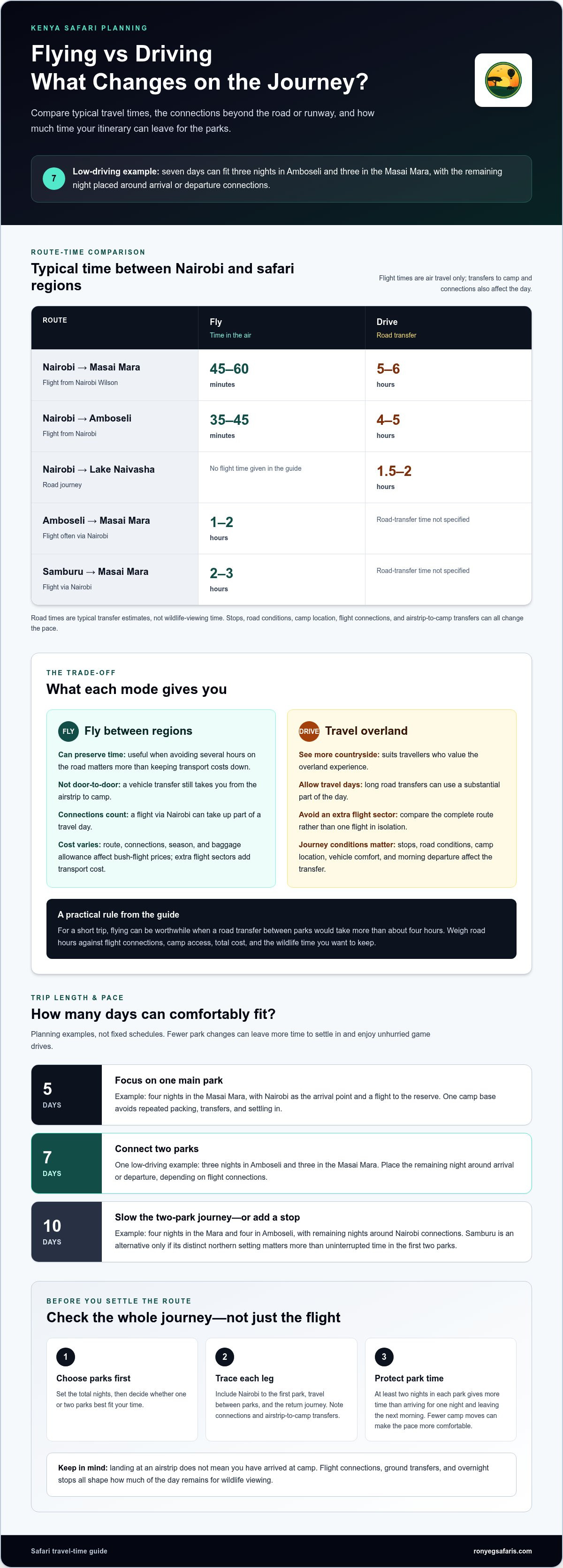
A Kenya safari without long drives can fit into seven days, with three nights in Amboseli and three in the Masai Mara. Flying can shorten the longest journeys: typical flights from Nairobi to the Masai Mara take 45 to 60 minutes, and to Amboseli, 35 to 45 minutes. The trade-off is more than the flight itself, because airstrip transfers and overnight stops also shape the pace.
It’s understandable to wonder whether flying is worth the extra cost. It can make sense when avoiding several hours on the road matters more than keeping transport costs down. Driving may suit travellers who value the overland experience and have more time. The right balance depends on how many parks you want to visit and how much time you want to spend in each.
This guide compares flying with driving and shows how five-, seven-, and ten-day itineraries can fit together. You’ll also see how airstrips, camp locations, ground transfers, and overnight stays affect the time available for wildlife viewing, helping you choose a safari pace that feels considered rather than hurried.
Key Takeaways
- Match the itinerary length to the number of parks you want to visit, and leave enough nights in each place to settle into the landscape.
- Compare the time saved by flying with the added transport cost, including the connections needed between parks.
- Choose camps with their airstrip transfers in mind, since the final journey to camp affects how much of the day remains.
- Build wildlife-viewing time around a relaxed pace, with fewer moves between camps and room for unhurried game drives.
- Use a tailor-made itinerary to bring flights, road transfers, camps, and overnight stays into one workable plan.
1. Five-, seven-, and ten-day itinerary examples
A Kenya safari without long drives depends on how many destinations you include and how you connect them. For five days, focus on one main park. Seven days can comfortably connect two, while ten days allows a slower two-park journey or an additional stop. These are planning examples, not fixed schedules.
For a short safari focused on wildlife viewing, consider Amboseli National Park or the Masai Mara. Both are established safari destinations for game drives, and the Mara is known for Great Migration river-crossing experiences. Your choice of park shapes the itinerary more than adding extra stops.
A five-day example could use four nights in the Masai Mara, with Nairobi as the arrival point and a flight to the reserve. A typical flight from Nairobi Wilson to the Masai Mara takes 45 to 60 minutes. Keeping one camp base avoids spending a short trip repeatedly packing, transferring, and settling in. It also leaves more time for game drives with guides and watching animals across the open landscape.
For seven days, one low-driving option is three nights in Amboseli and three nights in the Masai Mara. The remaining night can sit around the arrival or departure, depending on flight connections. This itinerary gives each park enough time to feel distinct without changing camps every day. A flight from Nairobi to Amboseli typically takes 35 to 45 minutes; the Amboseli-to-Mara flight takes 1 to 2 hours, often via Nairobi.
Ten days can hold the same two parks at a gentler pace, with extra nights in one destination rather than another rushed transfer. For example, allow four nights in the Mara and four in Amboseli, then place remaining nights around Nairobi connections. Alternatively, add Samburu only if its distinct northern setting matters more than uninterrupted time in the first two parks. The Samburu-to-Mara flight takes 2 to 3 hours via Nairobi, so the connection still uses part of a travel day.
Among these destinations, Lake Naivasha is closest to Nairobi by road: the journey takes about 1.5 to 2 hours. Amboseli takes 4 to 5 hours by road, while the Nairobi-to-Masai Mara transfer takes 5 to 6 hours. Those journey times make Naivasha a practical short-trip option, but a five-day safari can also work well by flying to one park and staying put.
Choose your itinerary in three steps: set your total nights, select one or two parks, then match flights and overnight stops to the route. Saving a minute on a connection matters less than avoiding an extra camp move that consumes the day. For a five-day visit, prioritize one destination; for seven or ten days, weigh the added landscapes against the travel time.
2. Flying versus driving between parks
Flying replaces long stretches on the road with short journeys between Kenya’s safari regions, but it doesn’t remove every transfer. A bush flight usually connects airstrips, then a vehicle takes you from the airstrip to your camp. Your total travel time includes both legs, plus any flight connection.
Typical flight times are 45 to 60 minutes from Nairobi Wilson to the Masai Mara, and 35 to 45 minutes from Nairobi to Amboseli. A flight from Amboseli to the Mara takes 1 to 2 hours, often via Nairobi. From Samburu to the Mara, expect 2 to 3 hours via Nairobi.
Bush-flight prices depend on the route, connections, season, and baggage allowance. Additional flight sectors increase the overall transport cost, so compare the complete itinerary rather than one flight in isolation. A direct route may save road time, while a connection can take up part of the day.
Driving from Nairobi takes about 4 to 5 hours to Amboseli and 5 to 6 hours to the Masai Mara. These are typical road-transfer times, not wildlife-viewing time. Stops, road conditions, and the location of your camp affect the journey, so a comfortable vehicle and a departure in the morning can make the transfer easier to manage.
For a short trip, flying can be worthwhile when a road transfer between parks would take more than about four hours. The trade-off is clear: driving keeps the journey overland and avoids an extra flight sector, while flying can preserve more of your limited time in the reserve. Consider the full route, not just the time in the air.
Road transfers suit travellers who want to see more countryside between destinations and can allow travel days in their itinerary. For example, a drive from Nairobi to Amboseli takes up a substantial part of the day. A bush flight is more practical when reaching the next region quickly is the priority, especially on a multi-park route.
Yes, Kenya safari packages can be planned around fly-in itineraries or shorter transfers. Choose your parks first, then align flights, airstrips, camp locations, and ground transfers. This avoids assuming that landing at an airstrip means you’ve arrived directly at your camp.
Before choosing, compare each leg in sequence: Nairobi to the first park, the transfer between parks, and the return journey. Note whether a flight connects through Nairobi and whether the connection leaves useful time for a game drive. An itinerary with fewer park changes can be more comfortable than squeezing extra destinations into the same number of days.
For a low-driving itinerary, plan a Kenya safari route around the parks and travel pace that matter most. The best balance weighs road hours against flight connections, camp access, and the wildlife time you want to keep.
3. Time and flexibility for wildlife viewing
Travel time matters because every transfer takes time away from wildlife viewing. In Kenya, spending at least two nights in each safari park gives you more time than arriving for one night and leaving the next morning. For the Masai Mara or Amboseli, three nights is preferable when your itinerary allows.
Three nights in one park leave room for several game drives without changing lodges. You can settle into the landscape, return to a favourite area, or give a guide time to follow fresh animal activity. A transfer day still affects your schedule, so don’t treat arrival day as a full day in the reserve.
For a seven-day visit, three nights in Amboseli and three in the Masai Mara allow time in both parks. Keep in mind that the connection between parks takes up part of a day, whether you travel by road or air. A one-park itinerary can preserve more uninterrupted wildlife viewing, while two parks offer a change of scenery and wildlife.
Guided game drives follow an agreed schedule, helping coordinate vehicle use, lodge timings, and transfers. Self-driving in East African national parks gives visitors more control over how long to watch wildlife. That flexibility can suit travellers who prefer to linger at a sighting, though they must also manage the route and driving themselves.
Build your itinerary around the wildlife viewing time you value most. If the Great Migration is central to your Masai Mara plans, allow enough nights there rather than adding another destination. The migration moves across the region, and a longer stay gives you more opportunities to explore different areas with your guide.
Disruptions can also affect wildlife viewing. A reported seven-day guided safari lost a full day of viewing after a vehicle breakdown. This example shows why a compact itinerary leaves little spare time: one disrupted day can take a large share of the planned game drives.
Use these planning steps before choosing lodges:
- Count the nights available in each park, excluding overnight stops outside it.
- Mark each transfer separately, including the journey from an airstrip to a lodge.
- Protect the longest stay for the park that matters most to your wildlife goals.
- Leave space for unhurried viewing instead of changing camps after every game drive.
In Africa, a safari’s pace is part of the adventure. Fewer transfers and longer stays can make each day feel less divided between travel and wildlife. Choose guided structure or self-drive flexibility according to how you want to spend your time in the park.
4. Airstrips, camps, and ground transfers
A fly-in safari joins three parts: the airport, a bush airstrip, and the road transfer to camp. Nairobi Wilson is the usual departure point for the flights described here. From there, typical flights take 45 to 60 minutes to the Masai Mara and 35 to 45 minutes to Amboseli.
You can fly from Nairobi to the Masai Mara and Amboseli, and include Samburu in a fly-in route. A Samburu-to-Mara flight takes 2 to 3 hours via Nairobi. Laikipia can also be considered in a fly-in itinerary, with the route shaped around its airstrip and the camp’s location.
The airstrip is not necessarily beside your lodge. A 40-minute drive over bumpy tracks can take a substantial part of the afternoon, even after a short flight. Choosing a camp around 10 minutes from its airstrip reduces that transfer and may leave more daylight for settling in or a game drive.
For each destination, map the sequence before booking: airport, flight, airstrip, vehicle transfer, then camp. Check how the route handles connections through Nairobi, especially when flying between separate safari regions. A flight from Amboseli to the Masai Mara takes 1 to 2 hours, often via Nairobi, so the air time alone doesn’t show the full travel day.
Road transfers remain an option. Nairobi to Amboseli typically takes 4 to 5 hours by road, while the drive from Nairobi Wilson to the Masai Mara takes 5 to 6 hours. Amboseli to the Mara takes 7 to 9 hours via Nairobi, and Samburu to the Mara takes 8 to 10 hours. These examples show why flights are often considered when a park-to-park road transfer exceeds about four hours.
Road conditions vary along Kenya’s safari routes. The dry seasons are recommended for travel in Kenya, Uganda, and Tanzania because they can help avoid difficult road conditions. Even then, a road journey and a short transfer from an airstrip are separate parts of the plan. Allow for both when deciding how much time remains for wildlife viewing.
Booking works best as one connected itinerary. Set the parks and camp nights first, then align flights, park fees, and lodge transfers with your travel dates. Include every transfer in the schedule, including the vehicle ride from the airstrip. For the Masai Mara, plan park fees alongside the days spent in the reserve, as the fee period changes by season.
Before confirming the route, compare the full travel sequence rather than flight time alone. A nearby camp can make an airstrip arrival efficient, while a distant lodge may mean a long final drive. This matters most on a short Kenya safari, when each transfer competes with time on the ground.
5. Camping and overnight stays
An overnight stop shapes the next day’s drive, game drives, and time spent watching wildlife. In Kenya, choose a secure place to stay near your route or planned park visit. Avoid wild camping in most of East Africa; use secured campsites or stay within national parks.
For a safari with fewer hours on the road, plan overnight stays around the places you want to explore. A camp close to a park entrance can reduce the drive before a game drive. For a fly-in stay, include the airstrip transfer in your overnight plan rather than treating it as a separate detail.
The season also shapes the feel of your stay. Kenya’s green season runs from November to May, while June to October are dry months. The season can influence road conditions and the landscapes outside your camp. Plan your nights around the places you most want to see, rather than changing accommodation just to add another stop.
For the Masai Mara or Amboseli, preferably spend three nights in the park. At least two nights in any Kenyan safari park give you time to settle in and take game drives without packing again immediately. On a short itinerary, a longer stay at one camp can preserve more wildlife-viewing time than adding an overnight stop elsewhere.
Before settling on camps, map each night against the day’s arrival and departure. A late arrival may leave little time for a drive, while an early departure can make for a rushed start. Keep the first and final nights close to the relevant airport or transport connection when that reduces unnecessary backtracking.
Use these practical checks when arranging overnight stays:
- Match each camp night to the park or destination you plan to visit next.
- Include the road transfer between the airstrip, camp, and park in the schedule.
- Choose secured campsites or accommodation in national parks instead of wild camping.
- Keep enough consecutive nights at your priority destination for unhurried game drives.
For example, Amboseli and the Masai Mara offer different landscapes, so plan the transfer between them before adding another overnight destination. A domestic flight can shorten some journeys, but the drive from the airstrip to camp still belongs in the day’s schedule. Careful sequencing helps whether you prefer a campsite or a lodge.
Thoughtful overnight planning keeps the trip grounded in the places you came to experience. Plan your safari stays around camp locations, transfers, and the season you want to travel.
Ronyeg Kenia Tours and Travels: Tailor-made Kenya safaris
Ronyeg Kenia Tours and Travels designs tailor-made Kenya safaris for travellers balancing time on the road with time in the parks. Its road and air itineraries bring flights, camp locations, ground transfers, and overnight stays into one plan, so you can compare the journey as a whole rather than choosing each leg separately.
Choose a tailor-made itinerary when you have a limited number of days, want to combine destinations such as Amboseli and the Masai Mara, or need a considered pace for a festive-season journey. Safari packages offer another way to plan a Kenya trip around the places and experiences that matter to you.
To discuss your preferred route and travel pace, contact Ronyeg Kenia Tours and Travels or visit ronyegsafaris.com.
Shape the journey around what matters most
The best pace isn’t measured by how many places fit on a map. It comes from deciding what you want to carry home: a particular landscape at first light, time to follow wildlife with a guide, or the contrast between two distinct regions. Let that priority shape the route, then give each journey and overnight stay a purpose. A Kenya safari without long drives can still feel expansive when your days are planned around being present, not constantly moving.
Ronyeg Kenia Tours and Travels offers tailor-made Kenya safaris for travellers shaping that balance, alongside Festive 2026/27 safaris and travel-trade ground partner services. The next step is to share the kind of experience you want and the pace that suits your days. Contact Ronyeg Kenia Tours and Travels to begin planning. Kenya’s open country will meet you at its own unhurried rhythm.
Frequently Asked Questions
Is a fly-in Kenya safari worth the extra cost?
It can be worthwhile when saving time on the road matters more than keeping transport costs down. For example, flying between distant parks can preserve time for game drives, while driving may suit a longer trip where the journey itself is part of the experience. Compare the complete route, including connections and transfers from airstrips to camps. The value depends on your available days, preferred pace, and how many parks you plan to visit.
Can I avoid a full-day drive between Samburu and the Masai Mara?
Yes. A flight from Samburu to the Masai Mara typically takes 2 to 3 hours via Nairobi, avoiding the 8 to 10-hour road journey. Include the time needed to reach the airstrip and continue from the Mara airstrip to camp. If your flights connect through Nairobi, the connection schedule also affects the day. Keeping enough nights in both reserves makes the shorter transfer more useful.
How can I reduce fatigue and make transfers easier?
Reduce repeated packing by choosing fewer camps and staying several nights at each destination. Avoid planning a long road transfer straight after a late arrival, and keep the first night near your arrival point when that simplifies the route. During transfers, carry essential personal items separately from your main luggage. A well-paced itinerary also leaves room to rest instead of treating every arrival day as a full safari day.
How many nights should I spend in each park?
Plan at least two nights in each Kenyan safari park, and preferably three nights in the Masai Mara or Amboseli. These stays allow time for game drives on separate days without an immediate camp move. If your trip has limited nights, choose one priority park rather than dividing your schedule among several destinations. The best allocation depends on which landscapes and wildlife experiences matter most to you.
Is it better to fly or drive between Kenya safari parks?
Flying usually suits routes where driving would take more than about four hours, especially when your itinerary has little spare time. Driving may suit travellers who want an overland journey and can dedicate more of the trip to transfers. Compare door-to-door time, not just flight duration: connections, airport time, and the transfer from the airstrip to camp all affect your arrival time.
What are the best camps and airstrips for a fly-in Kenya safari?
The best pairing is an airstrip serving your chosen reserve and a camp with a practical onward transfer. Start with the parks you want to visit, then match each airstrip to a camp location and the order of your flights. A nearby camp can simplify arrival; a distant one may add a substantial road leg. The right choice depends on your route and how much time you want for wildlife viewing.
What is the Kenya safari itinerary with the least driving?
Choose one park and one camp base, fly in from Nairobi, then stay there rather than travelling between regions. If you want two parks, connect them by air and limit additional stops. A seven-day low-driving example pairs three nights in Amboseli with three in the Masai Mara. Account for connections and transfers in the itinerary, rather than counting only the time spent driving between parks.
Which Kenya safari lodges and camps are near airstrips?
Camp proximity varies by reserve and airstrip, so start with the exact airstrip serving your itinerary. Compare the ground transfer from that airstrip to each camp, then consider how your arrival time fits with your first game drive. A camp close to one airstrip may be poorly placed for another park or route. Choose accommodation around the full flight sequence, not just a map pin.


