

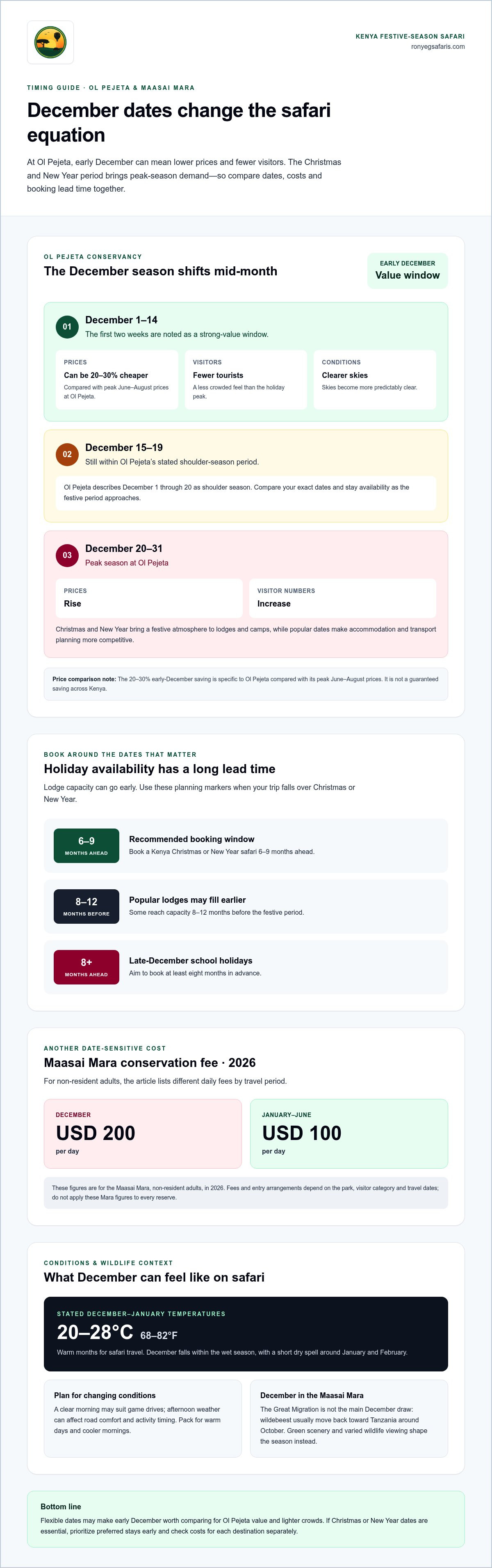
For a Kenya festive season safari, plan to book 6-9 months in advance; popular lodges can fill earlier, with some reaching capacity 8-12 months before the festive period. Early December can bring lower prices and fewer visitors at Ol Pejeta Conservancy, while late December is peak season there.
A Kenya festive season safari has a particular pull: warm light across open country, wildlife gathering near water, and a quieter rhythm at the coast. It also means weighing dates, destinations and availability together. This guide explains how timing affects costs and crowds, which parks and reserves suit different priorities, and how to shape an itinerary around the experience you want.
From the Maasai Mara’s broad plains to Amboseli beneath Kilimanjaro, the right route depends on your dates, pace and interests. Use this practical guidance to decide where to go and when to plan, so the journey is as thoughtfully arranged as the itinerary.
Key Takeaways
- Plan your booking timeline around holiday travel dates and the lodge and itinerary choices that matter most to you.
- Weigh early-December travel against Christmas and New Year dates when balancing budget and crowd levels.
- Choose parks and reserves by the landscapes and wildlife experiences you want, rather than trying to fit every destination into one trip.
- Compare itineraries by the accommodation, meals, game drives and transport they include, not just the route.
- Shape the trip around your preferred pace, from a focused wildlife circuit to a safari paired with time on the coast.
How far in advance should I book a Kenya Christmas & New Year safari?
Book a Kenya Christmas or New Year safari 6-9 months ahead. Popular lodges can reach capacity 8-12 months before the festive period, so early planning gives you more choice of dates and stays. For late-December school holidays, aim to book at least eight months in advance. The Kenya festive season safari you choose will shape how much time you need to plan its route, accommodation and transport.
Start with the trip length, then match destinations to your available days. Christmas and New Year itineraries range from a seven-day wildlife safari to a ten-day safari paired with a beach holiday. A common Kenya safari lasts between a week and 10 days, while a 13-day tour gives more time for a wider circuit. Kenya bush-and-beach itineraries can also span 10 nights, combining inland wildlife viewing with time on the coast.
Plan the route before adding optional activities. First, decide whether the Masai Mara is your main wildlife destination, then consider how Nairobi fits into your arrival or departure. Allow time for travel between destinations instead of filling every afternoon with drives. January dates, overnight stops, and the balance between game viewing and rest all shape a workable itinerary.
Families may prefer fewer transfers and time to rest between drives. Couples might choose quieter stays or combine a safari with a beach holiday, while solo travelers can weigh a shared itinerary against a more individual route. In each case, compare the pace, destinations and activities included.
Use this booking sequence: settle your dates, choose a trip length, then shortlist parks and accommodation styles that suit your priorities. Next, compare what each itinerary includes, such as game drives, a stay near the Masai Mara or time on the coast. This makes it easier to assess the difference between a seven-day circuit and a longer journey.
For Christmas and New Year, review the full itinerary before settling on a route. Check the order of overnight stops, how Nairobi connects with the first safari destination, and whether afternoons allow time to rest. If you plan to travel in late December, start planning early. If your schedule is flexible, compare early-December departures with holiday-week options. Clear priorities help you choose an itinerary that fits, rather than simply selecting the first option.
Early-December shoulder-season pricing and crowds
Early December offers a different rhythm from the crowded holiday weeks. At Ol Pejeta Conservancy, December 1 through 20 is described as shoulder season, with lower prices and fewer tourists. The first two weeks are noted as a strong-value window, while skies become more predictably clear. Compared with peak June-August prices, early December can be 20-30% cheaper at Ol Pejeta. This comparison is specific to that conservancy, not a promise of identical savings across Kenya.
Late December changes the balance. At Ol Pejeta, December 20 through 31 is peak season, when prices rise and visitor numbers increase. Christmas and New Year bring a festive atmosphere to lodges and camps, but popular dates also make accommodation and transport planning more competitive. If dates are flexible, compare an early-December itinerary with one that includes Christmas week. If the holiday itself matters most, prioritize preferred dates and stays before adding optional activities.
December and January are warm months for safari travel, with temperatures stated at 20-28°C (68-82°F). December falls within the wet season, though Kenya’s seasonal pattern includes a short dry spell around January and February. Conditions can shape the day’s pace: a clear morning may suit game drives, while changing afternoon weather can influence road comfort and activity timing. Pack for warm daytime conditions and cooler mornings, rather than assuming every day will feel the same.
The Great Migration is not the main December draw in the Masai Mara, as wildebeest usually move back toward Tanzania around October. Instead, look for varied wildlife viewing across different habitats and species. Seasonal rain can bring green scenery, while sparse vegetation and animals gathering near water can make sightings easier in some areas. December’s landscapes can feel quite different from the dry-season plains, even within one itinerary.
Kenya’s 2026 non-resident adult conservation fee for the Maasai Mara is USD 200 per day in December, compared with USD 100 per day from January through June. Fees and entry arrangements depend on the park, visitor category and travel dates, so the Mara figures shouldn’t be applied to every reserve.
For health planning, consult a physician or travel clinic preferably six weeks before departure about vaccinations. Travelers can review current entry requirements through the official Kenya eTA website.
To weigh dates, landscapes and activity pace together, use a festive safari planning guide as you shape your route.
Choosing Kenya national parks and reserves
Choose parks based on the landscapes and wildlife you want to experience. The Masai Mara National Reserve is closely associated with the Great Migration, while Amboseli offers views of elephants beneath Mount Kilimanjaro. Lake Nakuru brings a different setting to an itinerary. These destinations can anchor a festive trip, but more stops mean balancing variety against time on the road.
Lake Nakuru National Park is home to over 400 bird species, according to Kenya Wildlife Service. It can suit travelers who want birdlife alongside savannah wildlife. The Masai Mara and Amboseli offer distinct priorities, while Samburu, Tsavo East and Tsavo West broaden the choice of landscapes. Before selecting a route, name your main interest, such as migration, elephants, birds or a mix of habitats.
Season matters, and December and January are not identical. December falls within Kenya’s wet season, while January is classified as part of the dry season. January and February also bring a dry spell that can appeal to travelers. The broader dry season, from June to October, is generally considered the best time for wildlife viewing. December remains a good time to visit, though weather and habitat conditions vary.
For the migration, timing points to a different part of the calendar. Wildebeest usually reach the Masai Mara in July or August and remain in Kenya through September. Movement back toward Tanzania begins around October. That makes August to October the strongest migration window in the provided seasonal guidance. A December visit can still offer wildlife viewing, but should not be planned around the migration’s main arrival.
Rainfall can shape the feel of a park visit. Kenya’s main wet season runs from November to May, with March, April and May the wettest months. Showers are usually brief in the afternoon, except from March to May, when rain can be continuous. April and May are low season, and some lodges in high-rainfall areas close. Green scenery and newborn animals are part of the wet-season experience.
Use a simple selection process: choose one priority park, add a second destination only if it offers a different experience, then match both to your dates. For example, pair the Masai Mara with Amboseli for migration-associated plains and elephant country, or include Lake Nakuru for its birdlife. Consider each stop’s seasonal fit, and leave enough time to experience each place rather than simply collecting names on a map.
Included meals, accommodation, and transportation
Compare safari itineraries by their overnight stays, meal plans and transfers, not just their destinations. These details shape the balance between wildlife viewing and time at camp.
Safari Accommodation Research and Booking
Read the accommodation list alongside the route. One published itinerary includes three nights at Mara Serena Safari Lodge, two nights at Sarova Panafric Hotel in Nairobi, and two nights at Sarova Shaba Game Lodge. These stays show how a journey can combine a reserve, a city stop and a northern landscape.
Check how many nights each destination receives, and whether a stop is a brief transit or a substantial stay. For Amboseli, note the lodge’s position relative to the park and the time available for drives. During the holiday season, compare the stated accommodation plan with your preferred dates before settling on the full itinerary.
Holiday Meals and Accommodation
Meal details make a practical difference to each day’s rhythm. One 10-day tour itinerary includes 30 meals: 10 breakfasts, 10 lunches and 10 dinners. Check whether meals are listed for every travel day, and note where the itinerary leaves room for a picnic meal or dining at the lodge.
A typical Ol Pejeta safari day may include breakfast at camp or a bush picnic breakfast at 9:30 AM. That detail helps you picture the morning after an early start and understand how meals fit around wildlife viewing. For festive travel, read the accommodation and meal inclusions together, rather than assuming every lodge follows the same schedule.
Compare the length of each stay with the number of planned activities. An itinerary that changes lodges frequently can leave less time to settle in, while a longer stay can make the daily rhythm easier to follow. Use the named properties and meal breakdown to see what is covered each day.
Included Transportation
Transportation connects Nairobi, Amboseli and other destinations along the route. One itinerary lists eleven game drives in custom Land Cruisers. Review the vehicle and drives specified, then trace how road transfers link overnight stops and park visits.
Domestic flights have a stated luggage limit of one soft duffel bag per person, weighing no more than 15 kg (33 lb). If a route includes a flight, pack with that limit in mind. For road-based travel, check the sequence of transfers and drives, so travel time is clear alongside the activities.
Before booking, follow three steps: match each night to a destination, review meals by day, and trace every transfer between stops. This shows whether the pace suits your holiday, from a quiet evening at a lodge to a full day in the field.
Kenya safari destinations for Christmas and New Year
For a December itinerary, choose destinations for distinct experiences rather than trying to cover the whole country. The Masai Mara National Reserve offers wildlife viewing throughout the year, while Amboseli brings elephants into a landscape framed by Mount Kilimanjaro. Lake Nakuru National Park adds birdlife, and Ol Pejeta Conservancy offers another setting for game drives. A focused route gives each stop room to matter.
Start with the experience that matters most. If the Great Migration is your priority, Christmas falls outside its usual Kenya window: wildebeest typically reach the Masai Mara in July or August and remain through September. The reserve still offers wildlife viewing throughout the year, so December visitors can focus on the broader landscape and resident animals instead of migration crossings. This distinction helps set expectations before choosing overnight stops.
For elephants and open views, place Amboseli at the centre of the route. Pair it with the Masai Mara when you want contrasting plains and wildlife habitats, or add Lake Nakuru for a bird-focused stop. Kenya Wildlife Service describes Lake Nakuru National Park as home to over 400 bird species. At Ol Pejeta Conservancy, more than 400 bird species are present, including migratory species in December.
Ol Pejeta may suit travelers looking to include a conservancy alongside national parks and reserves. Its December birdlife offers a different focus from the Mara’s migration association or Amboseli’s elephants. Samburu, Tsavo East and Tsavo West are also Kenya safari destinations to consider. Compare them by the landscapes and activities you want, rather than adding stops just to increase the destination count.
A practical approach is to choose one anchor destination, then add stops that offer something different. For example, combine Amboseli with the Masai Mara for elephants and broad savannah viewing, or include Lake Nakuru if birdlife matters. Keep the route aligned with your available days and preferred pace. A morning in one park can be more rewarding than rushing between several destinations.
December is a good time to visit Kenya, but the experience differs from migration season. Game drives can focus on wildlife encounters across your chosen parks, while varied habitats create different viewing opportunities. The Big Five are lions, elephants, buffalos, leopards and rhinos, though no destination guarantees a particular sighting. Choose parks for their setting and experience, not a promised animal checklist.
Shape your Christmas or New Year route around the landscapes you most want to remember, then plan your Kenya safari destinations with those priorities in view.
Ronyeg Kenia Tours and Travels: Tailor-made Kenya safaris
Ronyeg Kenia Tours and Travels designs tailor-made Kenya safaris for travelers choosing between parks, wildlife experiences and time on the coast. Its festive 2026/27 safaris can be shaped around Christmas or New Year dates, with route choices such as the Masai Mara, Amboseli and Tsavo. This is useful when you want the itinerary’s pace and destinations to reflect your priorities, rather than follow a fixed route.
If you want to combine wildlife viewing with a beach stay, Safari & Tour Packages can bring both parts of the journey together. Ronyeg also provides travel-trade ground partner services for travel professionals arranging Kenya journeys for clients.
To plan a festive safari itinerary, contact Ronyeg Kenia Tours and Travels.
Give your festive journey a clear starting point
Turn your ideas into a simple travel brief. Note your preferred dates, the landscapes you hope to experience, how much time you want for wildlife viewing, and whether you’d like to include a coast stay. These choices give your Kenya festive season safari a clear shape before the details are arranged.
Leave room for thoughtful choices. Build the route around one defining experience, then balance it with quieter days and places that complement it. This helps the itinerary reflect your interests rather than feel like a list of stops.
Ronyeg Kenia Tours and Travels can help translate those priorities into a tailor-made Kenya safari. Contact Ronyeg Kenia Tours and Travels to begin shaping your festive journey. With your priorities in view, the next steps can follow a considered pace, from the first route decision to the open country itself.
Frequently Asked Questions
What are the best national parks to visit during Christmas & New Year in Kenya?
The right choice depends on the wildlife and landscapes you want to prioritize. The Masai Mara National Reserve suits broad savannah viewing, while Amboseli is known for elephants and views toward Mount Kilimanjaro. Lake Nakuru adds rich birdlife, and Tsavo East and Tsavo West offer other route options. For a balanced holiday, choose a few destinations with contrasting habitats rather than trying to cover every park.
Can You See the Great Wildebeest Migration During Christmas in Kenya?
Christmas falls outside the migration’s usual stay in Kenya. Wildebeest generally reach the Masai Mara around July or August, remain through September, then begin moving toward Tanzania around October. The reserve remains worthwhile for wildlife viewing beyond the migration, so shape a December visit around its resident wildlife and landscape. If witnessing the migration is your main goal, travel during its seasonal passage instead.
How do prices compare during the Christmas & New Year period versus other times?
Christmas and New Year safari travel typically costs more than travel in standard seasons, chiefly because demand for accommodation and transport rises around popular dates. The final itinerary cost depends on trip length, destinations, lodging choices, transport style and included activities. Compare itineraries by what they cover, not just their total cost: routes can differ in overnight stays, park visits and game drives.
How many days are needed for a Kenyan safari?
A week to 10 days gives many travelers room to combine more than one destination without making every day a transfer. Use your available time to set the route: a shorter visit can focus on one main park, while a longer journey can add another landscape or coastal stay. Leave space for arrival and departure logistics, so wildlife viewing doesn’t compete with airport transfers.
Is the Maasai Mara Still Worth Visiting in December?
Yes. The Maasai Mara offers wildlife viewing throughout the year, even though the Great Migration is usually elsewhere by December. A December stay can focus on game drives, open-country scenery and resident animals instead of river crossings. Choose the Mara if its landscape and wildlife suit your trip, or add another destination for a contrasting setting.
What Is the Best Place to Spend Christmas Day in Kenya?
There isn’t one best place for every traveler. Choose the Masai Mara for a classic reserve setting, Amboseli for elephants beneath Kilimanjaro, or Diani if a coastal holiday suits your plans. Consider how you want Christmas Day to feel: a morning game drive, a slower day at your accommodation, or time by the ocean. Let your preferred pace guide the destination.
What special holiday meals and celebrations are offered during Christmas & New Year safaris?
Meals and celebrations depend on the itinerary and accommodation, so read the daily plan to see what’s included. Safari experiences in Kenya can include a champagne bush breakfast or a Maasai village visit, but neither guarantees a Christmas menu or lodge celebration. If a particular meal or activity matters to you, include it in the itinerary discussion before choosing your route.
Why visit Kenya during the festive season?
Kenya offers a festive-season blend of wildlife viewing and varied landscapes, with the option to combine a safari with time on the coast. December brings migratory birds to places such as Ol Pejeta, while January’s drier spell can suit travelers seeking a different seasonal experience. The appeal is the variety: game drives, birdlife and time to slow down between destinations, all within a thoughtfully paced journey.


